What are the signs of mold in a Hammond, Indiana home?
The most common signs of mold in a Hammond home are a persistent musty smell, visible dark or fuzzy spots on walls and ceilings, and unexplained allergy-like symptoms that improve when you leave the house. Hammond's older housing stock and proximity to Lake Michigan create ideal conditions for moisture buildup — especially in fall when windows close and ventilation drops off.
Is mold testing worth it, or can I just clean what I see?
Cleaning visible mold without testing is like painting over rust — it looks better for a while, then comes back worse. Professional mold testing identifies the species, finds hidden colonies behind walls or under flooring, and tells you whether your indoor air is safe to breathe. Skipping the test often means missing the actual source of the problem.
How does a certified mold assessment work?
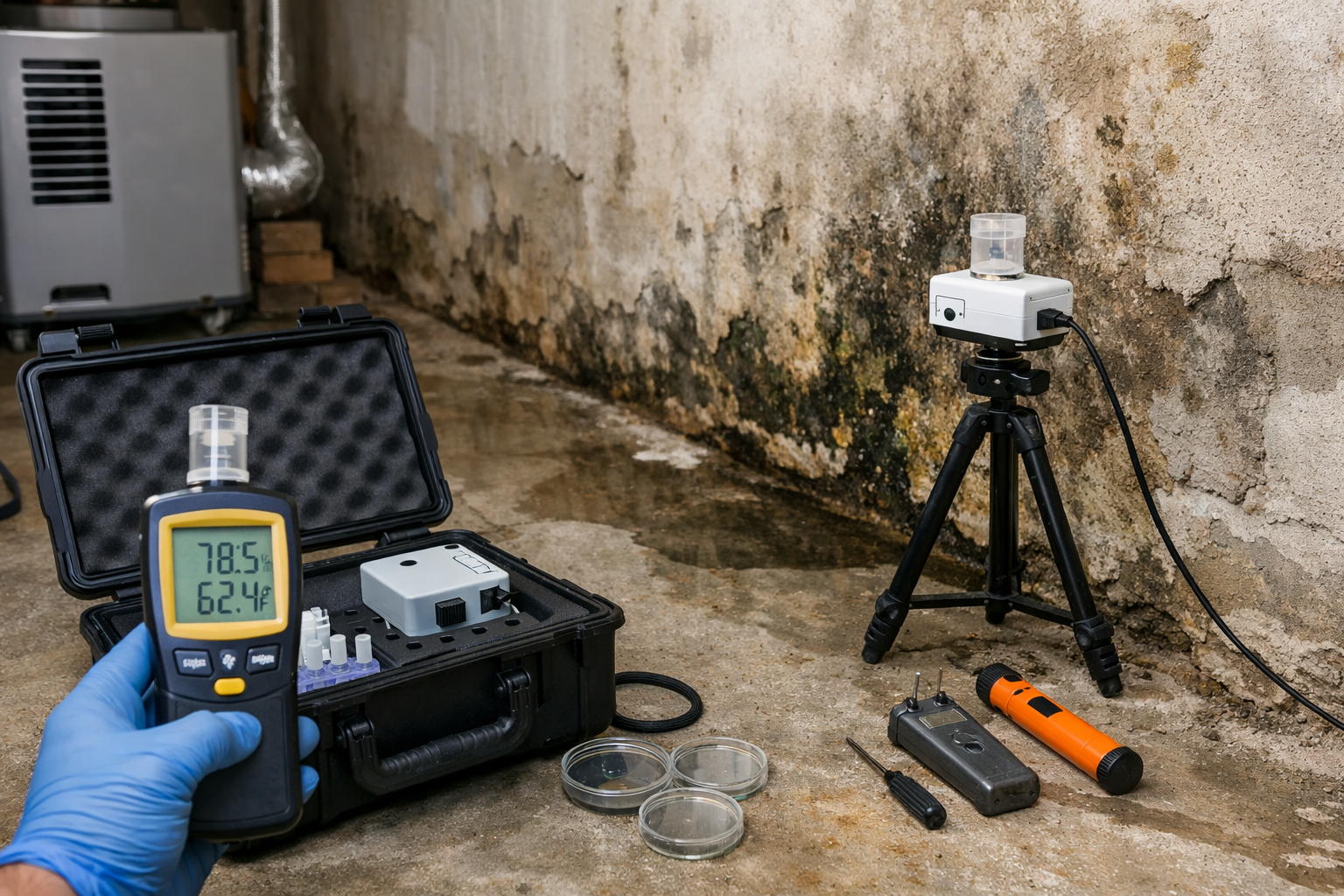
A certified mold assessment combines a full visual inspection with air and surface sampling. A trained inspector walks the property, identifies moisture sources and risk areas, then sends samples to a certified lab. You get a plain-English report with photos — usually the same day — that tells you exactly what was found, where it is, and what to do next.
Fall in Northwest Indiana brings cooling temps, closing windows, and the kind of trapped moisture that mold thrives on. If you've been noticing a smell you can't place or a cough that won't quit, this article covers what to watch for, why fall is the season mold problems surface, and how a certified mold assessment gives you real answers instead of guesswork.
Why Fall Is the Worst Season for Hidden Mold
All summer, your home breathes. Windows open, air moves, and moisture has somewhere to go. Then October hits, you button everything up, and the humidity that built up in basements, crawl spaces, and wall cavities has nowhere to escape.
In Hammond specifically, older bungalows and two-flats — many built before 1960 — tend to have minimal vapor barriers, older window seals, and uninsulated basement walls. That combination is a recipe for condensation, and condensation is where mold starts. According to the U.S. Environmental Protection Agency, mold can begin growing within 24 to 48 hours on wet surfaces. By the time you smell it, it's already been growing for a while.
Hammond's flat terrain and clay-heavy soil also mean water drains slowly after fall rains, putting extra pressure on foundation walls and crawl spaces. That slow seepage through block or brick — even when it doesn't look like a flood — creates the persistent dampness mold colonies need.
Signs You Shouldn't Brush Off This Fall
Some of these are obvious. Some aren't. All of them are worth paying attention to before winter seals everything in tight.
- A musty smell in one room, especially the basement or a bedroom corner — mold hides behind drywall and under carpet long before it's visible
- Dark spots or staining on ceilings, around window frames, or near baseboards — not all discoloration is mold, but all of it warrants a closer look
- Allergy or asthma symptoms that seem worse at home than outside — mold spores in the air irritate airways; if your symptoms improve when you leave, take note
- Peeling paint or wallpaper bubbling on exterior-facing walls — moisture is pushing through from behind
- Condensation on windows every morning, or ice dams forming on the roof last winter — both signal that moisture is struggling to move through your home's envelope
- A recent water event — a slow leak, a sump pump failure, or a backed-up drain — even after it's "dried out," drywall and subfloor can stay wet for weeks
If two or more of these apply to your home, a professional assessment isn't overkill — it's the only way to know for certain what you're dealing with.
Professional Mold Assessment vs. DIY Test Kits
| Factor | Certified Assessment | DIY Store Kit |
|---|---|---|
| Finds hidden mold | Yes — behind walls, under flooring | No — surface only |
| Air quality sampling | Yes — certified lab analysis | Limited or unreliable |
| Identifies species | Yes — matters for health risk | Rarely accurate |
| Actionable report | Same-day, plain English with photos | No guidance provided |
| Moisture source ID | Yes — inspector traces the source | No |
- Hidden mold: certified assessment finds it behind walls — DIY kits only test surfaces you can reach
- Air quality: certified lab analysis vs. unreliable consumer test results
- Species ID: certified assessment names what's growing — matters for health decisions
- Report: same-day, plain-English with photos vs. no remediation guidance
- Moisture source: inspector traces the root cause — a kit won't tell you why it's there
A store-bought test kit will confirm that mold spores exist in your home — which is true of virtually every home on earth. What it won't tell you is whether your levels are dangerously elevated, what species you're dealing with, or where it's coming from. That's the part that matters.
What Hawk Home Inspection's Mold Assessment Actually Covers
Our Mold Assessment service isn't a quick walk-through with a flashlight. The inspection covers the full structure — attic, basement or crawl space, bathrooms, laundry areas, kitchen, and any rooms with reported concerns. We take air samples and surface samples where warranted, and those go to a certified lab.
You're welcome to walk the inspection with us. Most clients do. We explain what we're seeing in plain English as we go, not in a report you have to decode three days later. The written report — with photos — is delivered the same day in most cases.
Our team brings 40+ years of combined inspection experience, and we perform over 600 inspections a year across Lake, Porter, and LaPorte counties. We've seen what Northwest Indiana homes do in fall and winter, and we know where to look. You can read more about what we cover under our Services page, including Air Quality Testing if mold is just one part of a broader indoor air concern.
If you're a buyer or seller working with a realtor in Hammond, a mold assessment is something you can request alongside a Residential Inspection — both in a single visit, same-day report. That matters when deals move fast.
According to the Centers for Disease Control and Prevention, exposure to mold can cause nasal stuffiness, throat irritation, coughing, wheezing, and eye irritation — with more serious effects for people with existing respiratory conditions. Getting a professional assessment removes the guesswork about whether your home's air is safe.
Fall Mold Check: What to Do Before You Close the Windows for Winter
- Check basement walls for efflorescence (white salt deposits — a sign of moisture moving through)
- Look at the ceiling in bathrooms and closets on exterior walls for dark spots or staining
- Smell your HVAC return air vents — musty air from the ducts is a red flag
- Check under sinks and around the water heater for slow drips you've been ignoring
- Look at window frames for condensation staining along the bottom edge
- If anything looks or smells off — schedule a certified mold assessment before heating season locks it in
The window to catch mold before winter closes in is short. Once you're running the furnace full-time and recirculating the same indoor air day after day, small problems become harder to ignore — and more expensive to fix.
Frequently Asked Questions
Can mold make my family sick even if we can't see it?
Yes. Mold growing inside wall cavities, under flooring, or in HVAC systems releases spores into your home's air without ever being visible. Symptoms like chronic congestion, headaches, and worsening asthma — especially at home — can be caused by elevated mold spore counts. An air quality test measures what's actually in the air your family is breathing, not just what you can see on the surface.
How soon can I get a mold assessment scheduled?
Hawk Home Inspection is available 24/7 for appointment requests, and same-day availability is offered in most cases across the Hammond and Northwest Indiana area. Call (219) 730-5463 to request an appointment. All estimates are free, and there's no obligation to book before you talk through what you're seeing.
Does a mold assessment cover the whole house, or just specific areas?
A full mold assessment covers the entire structure — basement, crawl space, attic, bathrooms, kitchen, laundry room, and any areas of concern you point out. Inspectors look at moisture entry points, ventilation, and structural areas that trap humidity. You're encouraged to walk the inspection so you can ask questions and understand what's being found in real time.
What if mold is found — does Hawk Home Inspection do the remediation?
Hawk Home Inspection provides the certified assessment and report — we identify what's there, where it is, and what caused it. Remediation is handled by a separate contractor, which is actually the right setup: the company that assesses the problem should not be the one who profits from fixing it. Your report gives any remediation company a clear, documented scope to work from.
Is mold testing different from indoor air quality testing?
They overlap, but they're not the same. Mold testing focuses specifically on mold species and spore counts — in the air and on surfaces. Indoor air quality testing casts a broader net, looking at VOCs, particulates, carbon monoxide, and other airborne contaminants in addition to mold. If your concern is specifically mold, a targeted mold assessment is the right starting point. If you have general air quality concerns, broader testing covers more ground.
If something in your Hammond home doesn't smell right this fall — or you just want peace of mind before heating season — don't wait it out. Request a free quote from Hawk Home Inspection today. Call (219) 730-5463, or schedule online anytime. We're open 24/7, same-day appointments available, and your estimate is always free.