
Is radon a real risk in Crown Point and Lake County, Indiana?
Yes — Lake County sits in a radon-prone zone based on Indiana's geological profile. The clay-rich glacial soils common throughout Northwest Indiana can trap and channel radon gas upward into home foundations. The EPA classifies Indiana as a high-radon state, and homes in Crown Point, Merrillville, and surrounding Lake County communities see elevated readings more often than many homeowners expect.
How do I know if my home needs radon testing?
Every home needs radon testing, regardless of age, construction type, or neighborhood. Radon is odorless and invisible — you cannot detect it without a test. If your home has never been tested, or if it's been more than two years since the last test, schedule one now. This is especially true before winter, when sealed homes concentrate radon gas to its highest indoor levels.
What level of radon is dangerous, and what should I do about it?
The EPA action level is 4 picocuries per liter (pCi/L) — if your home tests at or above that number, mitigation is recommended. Even levels between 2 and 4 pCi/L warrant serious consideration of a mitigation system. Long-term radon exposure is the second leading cause of lung cancer in the U.S., according to the American Lung Association, responsible for about 21,000 deaths annually.
If you're buying, selling, or just settling into a home in Crown Point or anywhere in Lake County, radon testing isn't optional — it's the kind of thing you'll wish you had done before you find out the hard way. The rest of this guide covers why local geology raises the stakes, what the testing process actually looks like, and how to make sure your results are accurate.
Why Lake County's Geology Makes Radon Testing More Urgent
Northwest Indiana was shaped by glaciers thousands of years ago. That process left behind dense clay and loam soils across Lake County — and those soils are particularly good at holding radon gas near the surface instead of letting it disperse harmlessly into the open air.
When radon accumulates in the soil around your foundation, it finds its way inside through cracks, gaps around pipes, and the natural porosity of concrete block walls. Older homes in Crown Point, Hammond, and Gary — many built with block foundations — are especially susceptible. But newer construction isn't immune either. Slab foundations, crawl spaces, and basement slab-on-grade construction all have entry points.
The risk compounds in winter. Indiana homeowners seal up tight from November through March. Windows stay closed, ventilation drops, and radon that might otherwise escape builds up indoors. That's why getting tested in the fall — before you button up the house — gives you the most accurate picture of what your family is breathing all winter long.
What Does Radon Testing Actually Involve?
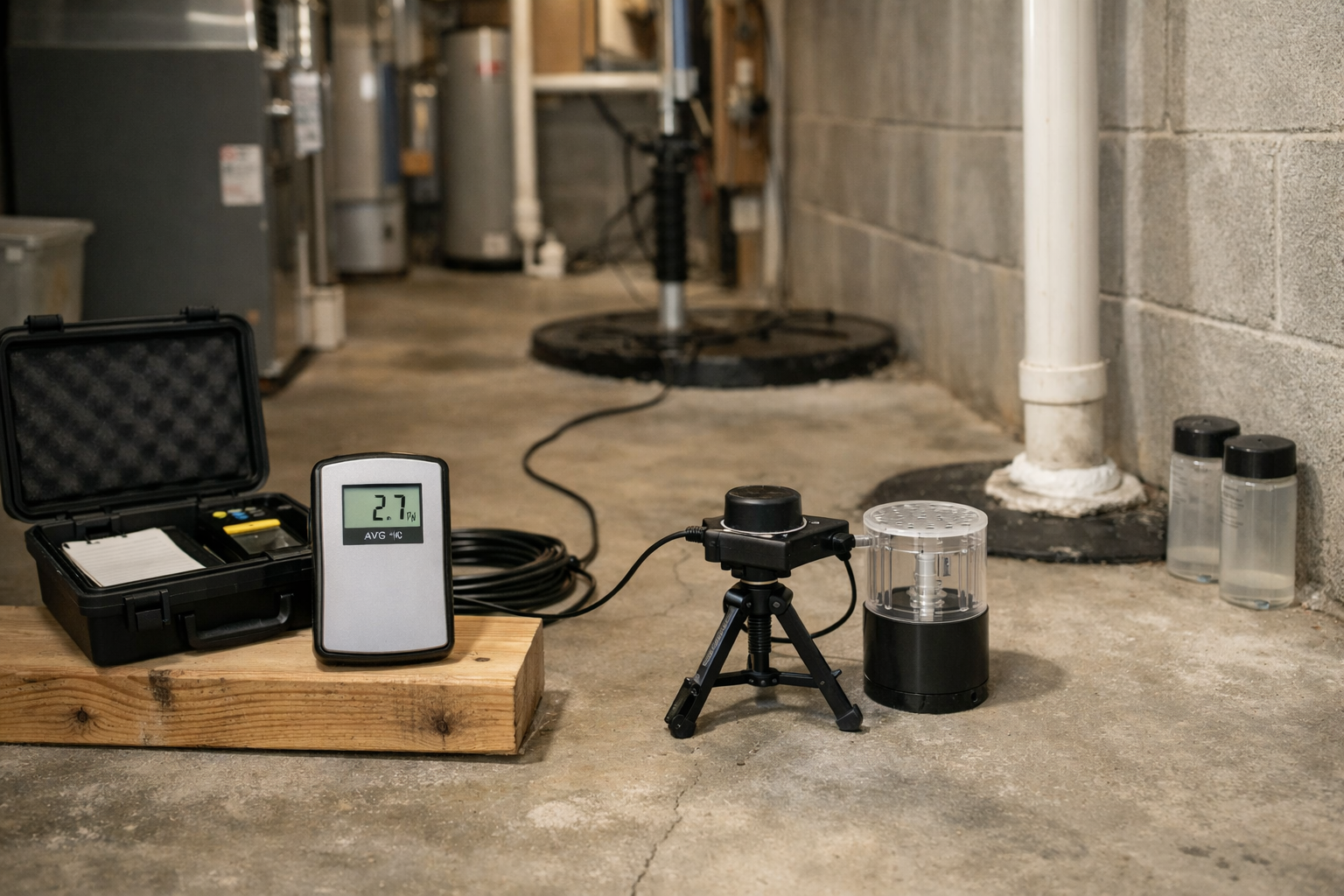
A professional radon test is straightforward and minimally disruptive. A certified inspector places a small testing device — typically a short-term charcoal canister or a digital continuous monitor — in the lowest livable level of your home. It stays in place for 48 hours under closed-house conditions, then the inspector retrieves it and submits it for analysis.
Results come back quickly, and a good inspector explains them in plain English — not lab jargon. At Hawk Home Inspection, your digital report arrives the same day, with photos and clear language about what the numbers mean and what your next steps should be. Our team has performed radon inspections across Lake, Porter, and LaPorte counties for years, and we know the difference between a result that warrants action and one that just needs monitoring.
Radon Testing: Professional vs. DIY Kit
| Factor | Professional Testing | DIY Mail-In Kit |
|---|---|---|
| Placement accuracy | Certified inspector places device correctly | User error can invalidate results |
| Chain of custody | Documented — accepted by lenders and real estate transactions | Often not accepted for real estate purposes |
| Report turnaround | Same-day digital report with photos | Days to weeks depending on lab |
| Result interpretation | Inspector walks you through findings in plain English | You interpret numbers on your own |
| Realtor/lender ready | Yes | Rarely |
- Placement accuracy: professional testing — vs. DIY kits where user error invalidates results
- Chain of custody: documented and lender-accepted — vs. DIY reports that typically aren't accepted in real estate transactions
- Turnaround: same-day digital report — vs. days or weeks with mail-in kits
- Interpretation: inspector explains your results — vs. reading lab numbers on your own
Who Should Schedule a Radon Test — and When?
The short answer: most homeowners in Lake County should test now if they haven't recently. But here are the situations where it becomes urgent:
- Buying a home in Crown Point, Merrillville, or anywhere in Lake County — request radon testing as part of your inspection package before closing.
- Selling a home — knowing your radon level upfront prevents last-minute surprises that can kill deals.
- Moving into fall or winter — this is peak radon season in Indiana. Test before you seal the house.
- After any basement renovation or addition — changes to your foundation can shift how radon enters.
- If your last test was more than 2 years ago — radon levels change over time as soil and foundation conditions shift.
Our Crown Point clients often add radon testing to a full residential inspection — it's efficient, and it gives you a complete picture of the home's health in one visit. We do 600+ inspections per year across Northwest Indiana, and radon is one of the most commonly requested add-ons, especially when buyers have done their homework.
If you're concerned about more than just radon, our Air Quality Testing covers a broader range of indoor environmental concerns — useful for older homes or properties with known water intrusion history.
Before Winter Arrives: Your Radon Checklist
- Schedule a certified radon test — before you close windows for the season
- Test the lowest livable level of the home (basement or first floor slab)
- Maintain closed-house conditions for the full 48-hour test window
- Get a same-day report you can share with your realtor or lender if needed
- If results are at or above 4 pCi/L, contact a licensed mitigation contractor
- Retest after any mitigation system is installed to confirm it's working
Radon mitigation — when it's needed — is straightforward and effective. A sub-slab depressurization system typically brings elevated levels well below the action threshold. But you can't fix what you don't know about. Testing comes first.
Ready to schedule? Hawk Home Inspection is open 24/7 for appointments, same-day availability is common, and all estimates are free. Call us at (219) 730-5463 or request your inspection online — we'll take care of the rest.
Frequently Asked Questions
How long does a professional radon test take in Crown Point?
The test itself runs 48 hours under closed-house conditions — meaning windows and exterior doors stay shut except for normal entry and exit. The inspector places the device at the start and retrieves it at the end. Your digital report with results typically arrives the same day the device is picked up. From scheduling to results, the whole process usually wraps up within three to four days.
Does a newer home in Lake County still need radon testing?
Yes. Radon entry isn't about the age of the home — it's about the soil beneath it and the pathways into the foundation. Newer construction in Crown Point, Schererville, or Portage can test just as high as a 1950s block-foundation home in Hammond or Gary. Radon-resistant construction features help, but they don't eliminate risk, and they're not a substitute for an actual test.
Can I do a radon test myself instead of hiring an inspector?
DIY mail-in kits exist, but they carry real limitations. Improper placement, failure to maintain closed-house conditions, and no chain of custody documentation all undermine the result. More importantly, most real estate transactions — lenders and realtors included — require a professionally conducted test. If there's any chance you'll sell the home, or if you're buying, a certified inspector's report is what actually holds up.
What happens if my radon test comes back above 4 pCi/L?
A result at or above 4 pCi/L means the EPA recommends mitigation. The most common fix is a sub-slab depressurization system — a pipe and fan that pulls radon from beneath the foundation and vents it outside before it can enter the home. These systems are effective and typically bring levels well below the action threshold. You'll want to retest after installation to confirm it's working correctly.
Should radon testing be part of a standard home inspection?
It's not automatically included in most standard home inspections, but it's one of the most valuable add-ons you can request — especially in Lake County. Hawk Home Inspection offers radon testing alongside our full residential inspection services, so you can get your safety, structure, and systems evaluated in one coordinated visit. Bundling saves time and gives your realtor everything they need for the transaction.