Do I need a septic inspection when buying a home in Porter County, Indiana?
Yes — if the property you're buying uses a private septic system, a septic inspection is one of the most important steps in your due diligence. Porter County has a significant number of rural and semi-rural properties on private systems, and a failing septic can cost $10,000–$30,000 or more to replace. An inspection tells you exactly what you're buying before you close.
What does a septic inspection actually look for?
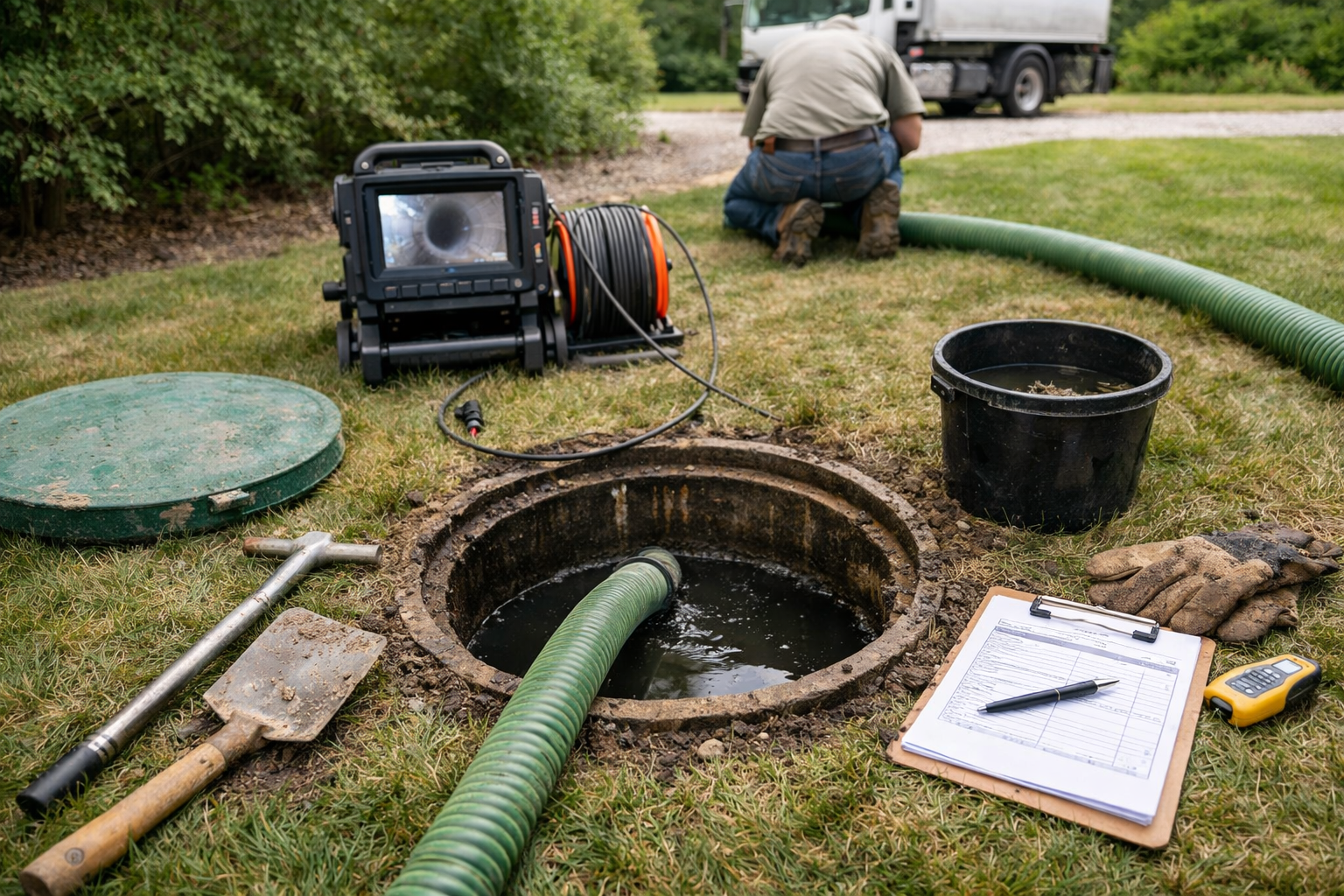
A professional septic inspection checks the condition of the tank, the integrity of the inlet and outlet baffles, signs of backflow or sludge buildup, and how well the drain field is absorbing. The inspector will also check for surface effluent — sewage surfacing in the yard — which is a clear sign of system failure. You get a full picture of the system's health, not just a visual glance.
How long does a septic inspection take, and when should I schedule it?
A standard septic inspection takes about one to two hours on-site. Schedule it during your inspection contingency window — the same time you'd book your general home inspection. That way, if the septic reveals a serious problem, you still have time to negotiate repairs, a price reduction, or walk away with your earnest money intact.
This guide covers what buyers in Porter County specifically need to know about septic systems — where they're most common, what can go wrong, and how a professional inspection protects you before you sign anything.
Why Porter County Buyers Need to Pay Close Attention to Septic Systems
Porter County sits between Lake County's more urban core and the rural stretches of LaPorte County. Towns like Valparaiso, Portage, and Chesterton have municipal sewer service in many neighborhoods — but step outside those cores and private septic systems are the norm. Properties in Boone Township, Center Township, and along the rural corridors near Kouts or Wheeler often rely entirely on private systems.
If you're buying outside city limits in Porter County, assume septic until proven otherwise. Your real estate agent can check, but always verify independently.
The soils in Porter County vary widely. Sandy soils near the Lake Michigan shoreline drain fast — sometimes too fast, bypassing the treatment process. Clay-heavy soils inland drain slowly and can overwhelm an undersized drain field after heavy rains. Neither extreme is ideal, and both create conditions where a system can appear functional until it suddenly isn't.
What Does Hawk Home Inspection Look at During a Septic Inspection?
Our Septic Inspection covers the full system — not just a lid pop and a look inside the tank. Here's what the inspection includes:
- Tank condition: Structural integrity, signs of cracking or corrosion, and current sludge and scum levels
- Baffles: Inlet and outlet baffles keep solids from reaching the drain field — we check that they're intact and functioning
- Distribution box (if present): Uneven flow to the drain field lines is an early warning sign of problems
- Drain field evaluation: We look for wet spots, odors, lush green patches, or surfacing sewage — all signs the field is failing or already failed
- Pumping recommendation: If the tank hasn't been pumped recently, we'll note it — pumping is often needed to fully assess internal condition
- Age and sizing: An undersized or aging system on a property that's added bedrooms over the years may be working beyond its designed capacity
You're welcome — encouraged, actually — to walk the property with us during the inspection. Our inspectors explain what they're seeing in plain English, not technical reports you have to decode later. Same-day digital reports with photos follow every inspection so you and your realtor have what you need fast.
Septic Warning Signs: What Buyers Should Watch For
- Wet, spongy ground over the drain field — even in dry weather
- Strong sewage odor in the yard or near the tank lid
- Slow drains or gurgling toilets inside the home
- Unusually bright green grass over the drain field area
- No record of the last pump-out (systems should be pumped every 3–5 years)
- System age over 25–30 years with no major service history
What Happens If the Septic System Fails Inspection?
A failed or distressed septic system doesn't automatically kill the deal — but it changes the negotiation entirely. Armed with a detailed inspection report, you can ask the seller to repair or replace the system before closing, negotiate a credit so you can handle it yourself, or simply walk away if the numbers don't work.
Without an inspection, you have no leverage and no warning. Buyers who skip the septic inspection sometimes discover the problem their first spring — when the ground thaws and the drain field can't keep up. Repairs at that point are entirely your cost.
According to the U.S. Environmental Protection Agency, a conventional septic system replacement typically runs between $3,000 and $7,000 at the low end — and complex systems, mound systems, or those requiring new drain field installation in difficult soils can run considerably higher. In Porter County, local soil conditions and permitting requirements can push those numbers up further.
How Does Septic Inspection Fit Into Your Overall Home Inspection?
At Hawk Home Inspection, we run eight inspection services under one roof. Most buyers in Porter County combine their Residential Inspection with a septic inspection, and many also add Radon Inspection — Porter County has documented elevated radon levels, and it's worth testing while you're already scheduling everything else.
If the home has a private well — common on rural Porter County properties with septic systems — Water Inspection is another smart add. A septic system that's been slowly leaking can contaminate a nearby well. Testing both gives you the full picture.
Bundling services saves you coordination time, and since we're open 24/7 for scheduling with same-day availability in many cases, we can usually get everything done in a single visit or back-to-back appointments during your contingency window.
Recommended Inspection Stack for Rural Porter County Buyers
| Inspection | Why It Matters Here | Risk If Skipped |
|---|---|---|
| Residential Inspection | Full structural, mechanical, electrical, and roof review | Hidden defects become your problem at closing |
| Septic Inspection | Many Porter County rural properties on private systems | Potential five-figure repair surprise after closing |
| Radon Testing | Elevated radon documented in Porter County | Long-term health risk; mitigation costs fall on you |
| Water Quality Testing | Well water common alongside septic systems | Contamination from aging or leaking septic |
- Residential Inspection: Full structural and systems review — vs. assuming the home is fine
- Septic Inspection: Catches costly system failures before closing — vs. inheriting the repair bill
- Radon Testing: Addresses documented Porter County risk — vs. long-term health exposure
- Water Testing: Confirms well water is safe — vs. assuming septic proximity hasn't affected it
The Indiana Department of Health recommends private well testing any time there's a property transfer — especially when a septic system is nearby.
Frequently Asked Questions
Does a home inspection automatically include the septic system?
No. A standard residential home inspection covers the structure, systems, and components of the home itself — the septic system is a separate service. You need to specifically request a septic inspection. If you're buying a property in rural Porter County or anywhere outside municipal sewer service, add it to your inspection order from the start.
Who pays for the septic inspection — buyer or seller?
In most transactions in Northwest Indiana, the buyer arranges and pays for the inspection during the due diligence period. However, if the inspection reveals problems, you can negotiate with the seller to credit the repair cost or fix the system before closing. The inspection gives you the leverage to have that conversation with real data in hand.
How old is too old for a septic system?
A well-maintained conventional septic system can last 25–40 years. The key word is maintained — regular pumping every three to five years significantly extends system life. A system with no service records that's 30+ years old on a property that's added bedrooms is a genuine risk. Our inspector will factor in age, size, soil conditions, and visible condition to give you an honest assessment.
Can the septic system pass inspection and still have problems?
A septic inspection is a snapshot of the system's condition on the day of inspection, not a lifetime guarantee. We check everything visible and accessible, and we note anything that signals future risk. An older system in borderline condition might technically pass today but show problems within a few years — we'll call that out clearly in your report so you can make an informed decision.
Do I need to have the tank pumped before the inspection?
Not always — but if the tank hasn't been pumped in three or more years, pumping before or during the inspection is often recommended. It allows the inspector to see the interior of the tank clearly and check the baffles properly. We'll advise you based on what we find when we open the lid. Some inspections require pumping to complete the assessment fully.
Buying a home in Porter County with a private septic system is common — and manageable — when you know what you're getting into. Don't leave it to chance. Call Hawk Home Inspection at (219) 730-5463 to schedule your septic inspection or request a free quote. We're open 24/7, same-day appointments are often available, and every estimate is free. Schedule your inspection today at hawkhomeinspect.com.